
Something magnetic is indisputably appealing about old wall posters. I have been hunting these bright items of the history of advertising and art all my life, in flea markets in Paris or in dusty bins in the upstate New York estate sales. This began as an informal fascination with the design of the mid-century but now has progressed to a true appreciation of the way these paper artifacts can freeze cultural time.
Vintage posters are not mere decoration, but also portals to past dreams, beauty and fears of their times. A French poster of an aperitif in 1920s tells another story but another poster of a psychedelic concert in 1960s has a great power of changing modern space and at the same time the links us with the past.
What Makes a Poster “Vintage”?
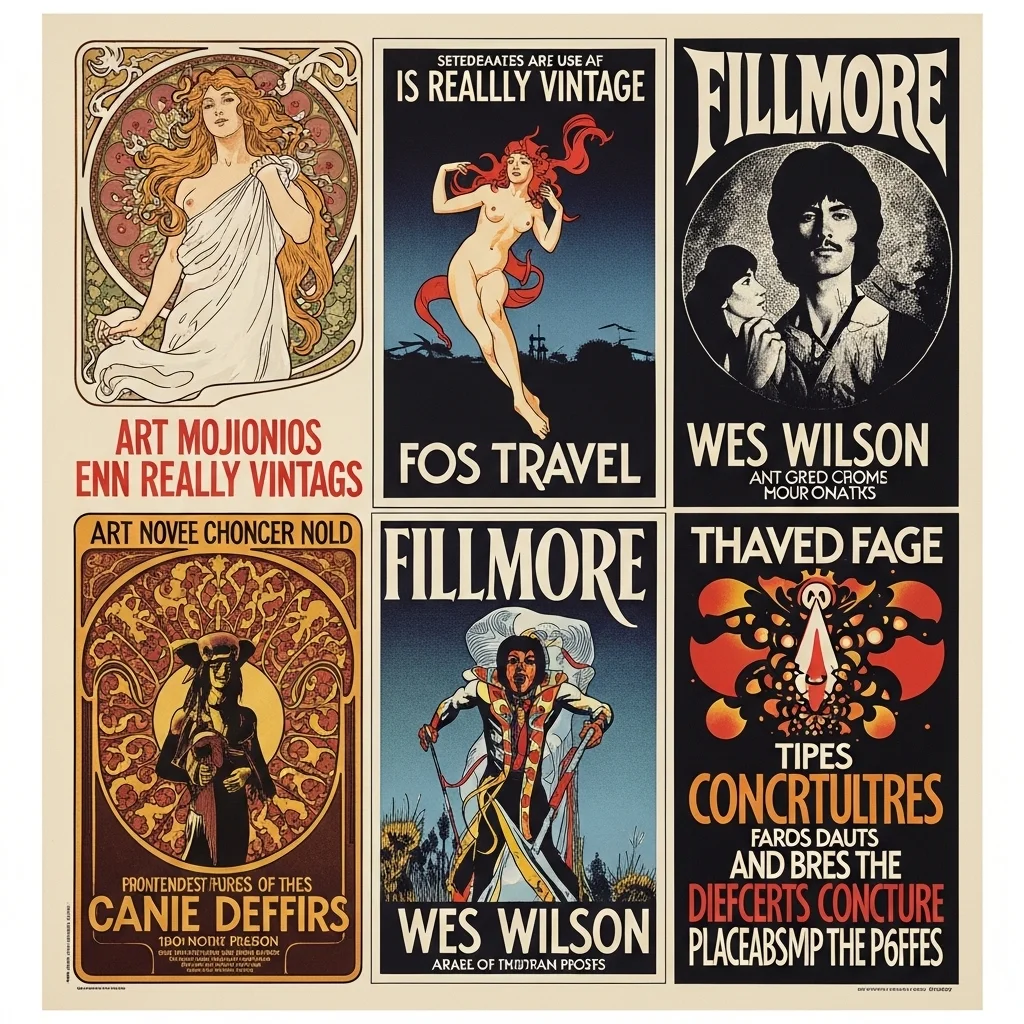
The word is used carelessly but according to the majority of collectors, any poster made between 1890s and 1970s is really vintage. There are separate eras within that time, the movement of Art Nouveau towards the end of the 19th century, with its flowing maidens and the brash geometry of the 1920s and 30s, the posters of the mid-century the travel posters with their wander-lust, and the defiant concert posters of the 1960s counterculture.
I now understand that it is not age that makes things valuable and desirable. A Fillmore concert poster created in 1968, and illustrated by Wes Wilson, may cost more and receive greater appreciation than a poster that is older, but of less artistic importance. What makes a poster really collectible is the artist, subject matter, condition, and rarity all of which contributes to the value of a poster.
The Golden Age of Poster Art
The era of 1890 to 1940 is what is believed to be the most successful era of poster design. Commercial advertising was put on the same level as fine art by artists such as Jules Chéret, Toulouse-Lautrec and A.M. Cassandre. They were not advertisements, but were lithographic masterpieces, drawn in pencil, with care and attention to every detail of the separation, and printed in good paper stock.
I have once looked at an original 1935 Cassandre poster of Normandie cruise line in one of the specialized dealers in London. The shading of the blue ocean, the geometrical exactness of the ship–it was reproduced, perhaps, with a dozen distinct color impressions. Somehow that is in contrast to most contemporary printing and that is why these works continue to get the interest of designers and art enthusiasts.
Many collectors are particularly interested in travel posters in the 1940s-1960s. Talented illustrators were hired by airlines, railways, and tourism boards to romanticize a destination. These posters offered adventure when international traveling was becoming a possibility to the middle classes. A Pan Am poster of exotic Bangkok or a British Railways advert of the Scottish Highlands -both are bright, idealized views of the world.
The Search of Authentic Vintage Posters.
Even the pursuit is in many cases as gratifying as the purchase. I have discovered treasures in antique stores, paper shows, Internet online auctions, and specialty dealers. There are strengths and weaknesses of each source.
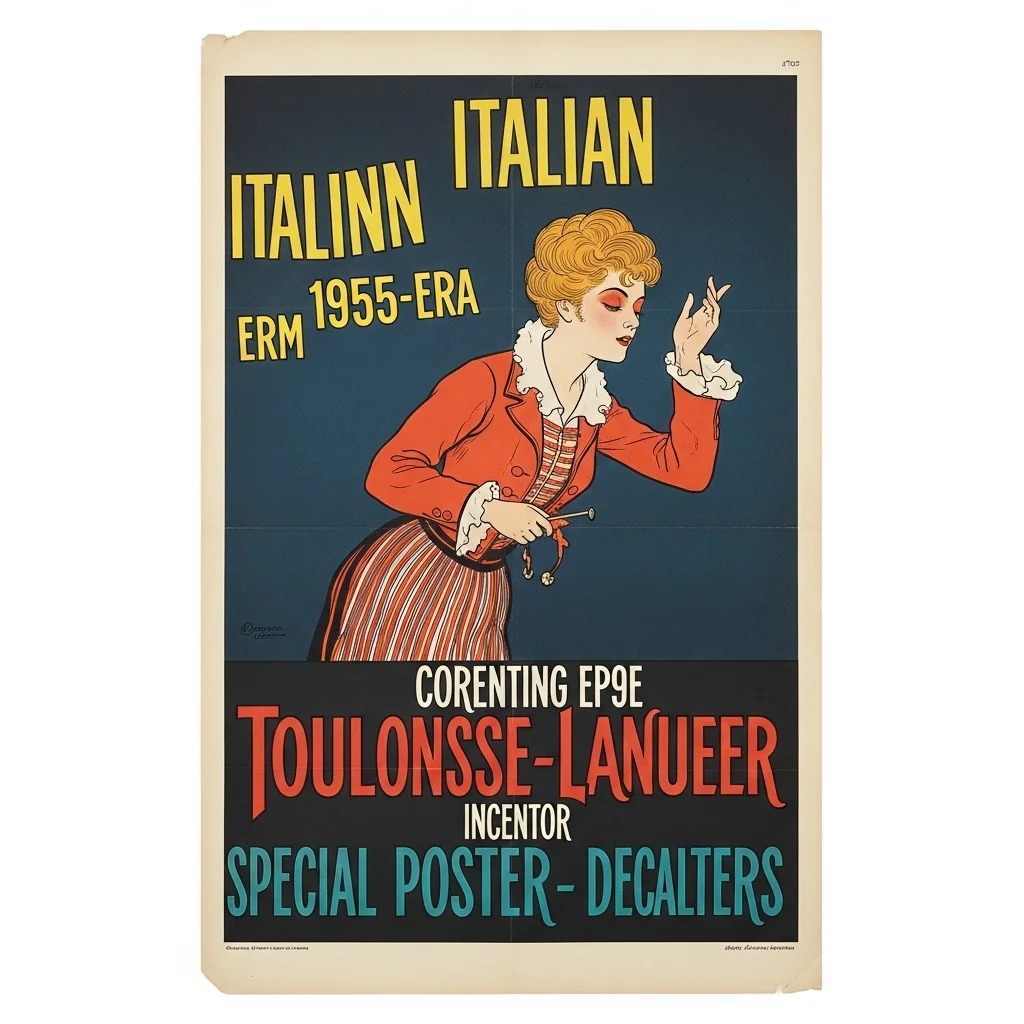
Unexpected discoveries can be made at antique malls and estate sales at affordable prices; however, it requires a fine eye. One time I found an Italian film poster of the 1950s era in an estate sale in Vermont and it was being sold at $20 simply because its owner did not value its importance. On the other hand, I have encountered blatant fakes in antique shops being charged collector prices.
Special poster dealers do provide authentication and expert services but at a fee. That knowledge and provenance is absolutely necessary when you are investing in something important, like an original 1896 lithograph by Toulouse-Lautrec. The condition reports and authenticity guarantees will be given by reputable dealers.
The internet has made the process of gathering open but should be cautioned. I have now acquired a skeptic personality when shopping online. Request close-ups of the texture and damage. Vintage posters are not faked, they wear with time, as they fox, have slight edge tearing, they may have old creases. Unnaturally clean ones could be reproductions.
State of Affairs, But Excellence is Its All.
In my case, new collectors are in love with pristine condition. Although condition of course is a matter of value, there is an element of wear that tells the story of the poster. Those horizontal fold lines? That poster was sent out or kept away folded, as most were. Pallor at the periphery? Decades of unpretentious growing old.
I have a concert poster of 1968 with a small tear on the corner and with staple holes which are faded at the top. A museum may not like it, but to me these staple holes indicate that someone was attached to it at least 50 years ago to put it on their wall. That’s authentic history.
With that said, however, serious damage, such as large tears, water stains, a lot of color loss, etc., has a significant effect on aesthetics and value. I do not like posters which have been badly restored using tapes or cleaning agents that can cause more destruction than the damage done to it.
The exhibition of Your Vintage Posters.
When well framed, your investment will be safeguarded as well as making it look better. I highly suggest that UV-protective glass or acrylic should be used to avoid fading. Vintages inks and papers are also prone to light exposure, I was reminded of this trick when a poster that dated to the 1950s which was kept close to a sunny window lost its color in a short span of only two years.
The degradation caused by chemicals is avoided by using acid-free matting and backing. Most of the framers are familiar with the archival techniques, but when writing about old works I always indicate that they are of museum quality.
The frame style itself is also a personal preference and aesthetic of the poster. Single black frames look simple and clean, whereas vintage wood frames may be used to match Art Deco or mid-century items. I also tend not to use very fancy frames that outshine the poster itself.
FAQs
Which is the way of knowing that a poster in the vintage is an original or reproduction one?
Discover how to print (lithographic texture is typical of copies), paper, (old paper feels different) and wear and tear (faked aging reproductions appear homogenous). A specialist dealer should be consulted when it is doubtful.
What would a decent range of prices of authentic vintage posters be?
It has prices that are astounding depending on artist, rarity and condition. Common mid-century should fetch $50-300, desirable examples should fetch $300-2000, and greatly higher the price of rare works by known artists.
Are there any special storage requirements of the vintage posters?
Keep flat or rolled (never folded) in an acid-free tissue, in the absence of humidity, extreme temperatures and direct light. They are best preserved in controlled environments where there is climate control.
Should vintage posters of reproduction be purchased?
Replicas might offer the appearance at a reduced price, however, they do not offer the investment opportunities and historical verification. They do make a good decoration when you do not want them as collectibles.
What is the way to clean an old poster?
Don’t. The efforts of home cleaning usually bring about irreparable damage. Anything more than a light dusting of the frame should be done by a professional paper conservator.
